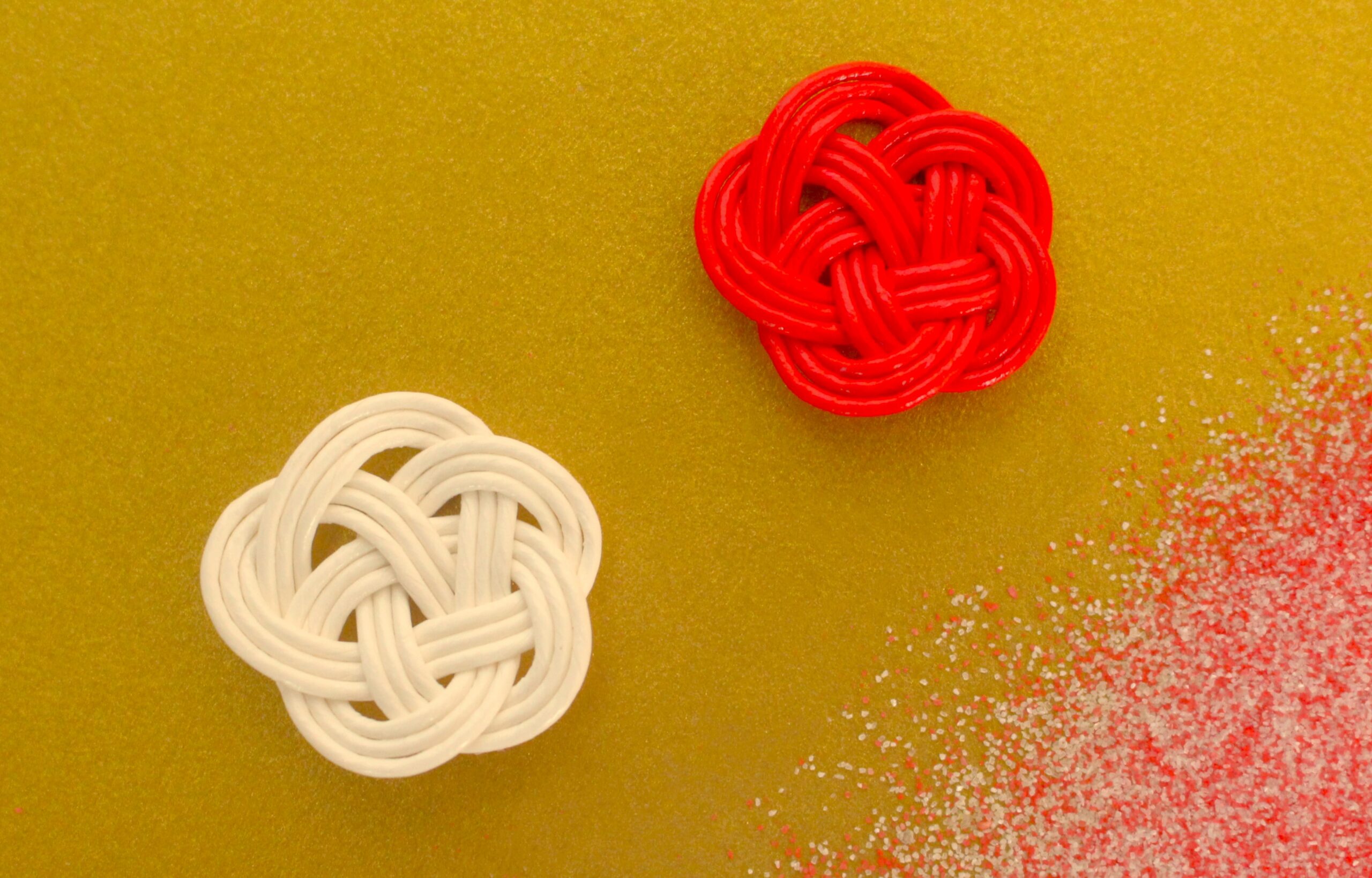
A Prayer in Every Knot:
The Deep World of “Mizuhiki” Accessories
Thank you for welcoming our Mizuhiki creation into your life. You were likely drawn to the delicate, dignified beauty of the small earring or hair ornament in your hand.
However, what you are holding is not just a “pretty” accessory. It is a physical piece of a 1,400-year-old Japanese spiritual culture: the art of “tying hearts together.”
Since ancient times, Mizuhiki has held three fundamental meanings:
- A Symbol of Purity: A seal proving an item is sacred and unopened.
- A Protective Amulet: A charm to ward off evil and misfortune.
- A Symbol of Connection: A tie that binds people and good fortune together.
This guide will take you on a journey into the hidden world behind your accessory, revealing the deep, rich story woven into its small, shining form.
Thank you for choosing a Mizuhiki accessory from Workspace Clover.
First, we would like to share some important care instructions for your new Mizuhiki accessory/item.
Mizuhiki is a delicate, traditional Japanese material made from tightly wound washi (Japanese paper) cords. To enjoy its beautiful shape and color for a long time, please follow the care guidelines below.
1. Avoid Water at All Costs
- Mizuhiki’s main component is paper. Exposing it to moisture is the primary cause of losing its shape, color fading, and weakening.
- Please remove your accessory on rainy or snowy days, when washing your hands, doing dishes, bathing, or visiting pools, hot springs, or saunas.
- We also recommend removing it during sports or any activity that causes heavy perspiration.
- If it accidentally gets wet, immediately blot the moisture gently with a dry cloth. Reshape it carefully and let it dry completely in a well-ventilated, shaded area. (Please note: depending on how wet it gets, it may not return to its original state.)
2. Protect from Force, Pressure, and Snags
- Mizuhiki is a delicate craft. Applying strong force or pressure can loosen the knots or warp the shape.
- Always remove the accessory when changing clothes or sleeping to prevent it from snagging and breaking.
- When not in use, we recommend storing it in a separate box or small pouch to prevent it from being crushed or tangled with other items.
3. Be Mindful of Storage
- Prolonged, direct sunlight (UV rays) will cause the colors to fade.
- Storing it in humid areas can lead to mold or discoloration.
- Please choose a cool, dry place away from direct sunlight for storage.
4. Avoid Oils and Chemicals
- Contact with skin oils, makeup, perfume, or hairspray can cause stains or discoloration over time.
- We recommend putting on your accessory as the final step, after you have finished your makeup and hair.
A little care will go a long way in preserving the distinct beauty of your Mizuhiki. We hope this small knot brings a touch of color to your day.
Thank you for your purchase, and we hope you enjoy it for a long time to come.
What is Mizuhiki? The Lore Behind the Cord
The charm of Mizuhiki craft deepens when you learn the “lore” behind it. Here is why your accessory is so much more than a simple paper cord.
Lore 1: It All Began with a Diplomatic Mission
The origins of Mizuhiki date back 1,400 years to Japan’s Asuka period (7th century).
When Ono no Imoko, a Japanese envoy, returned from a mission to the Sui Dynasty (China), he brought back a diplomatic document. Attached to the gift that accompanied it was a “red and white hemp cord,” tied as a prayer for a safe sea voyage.
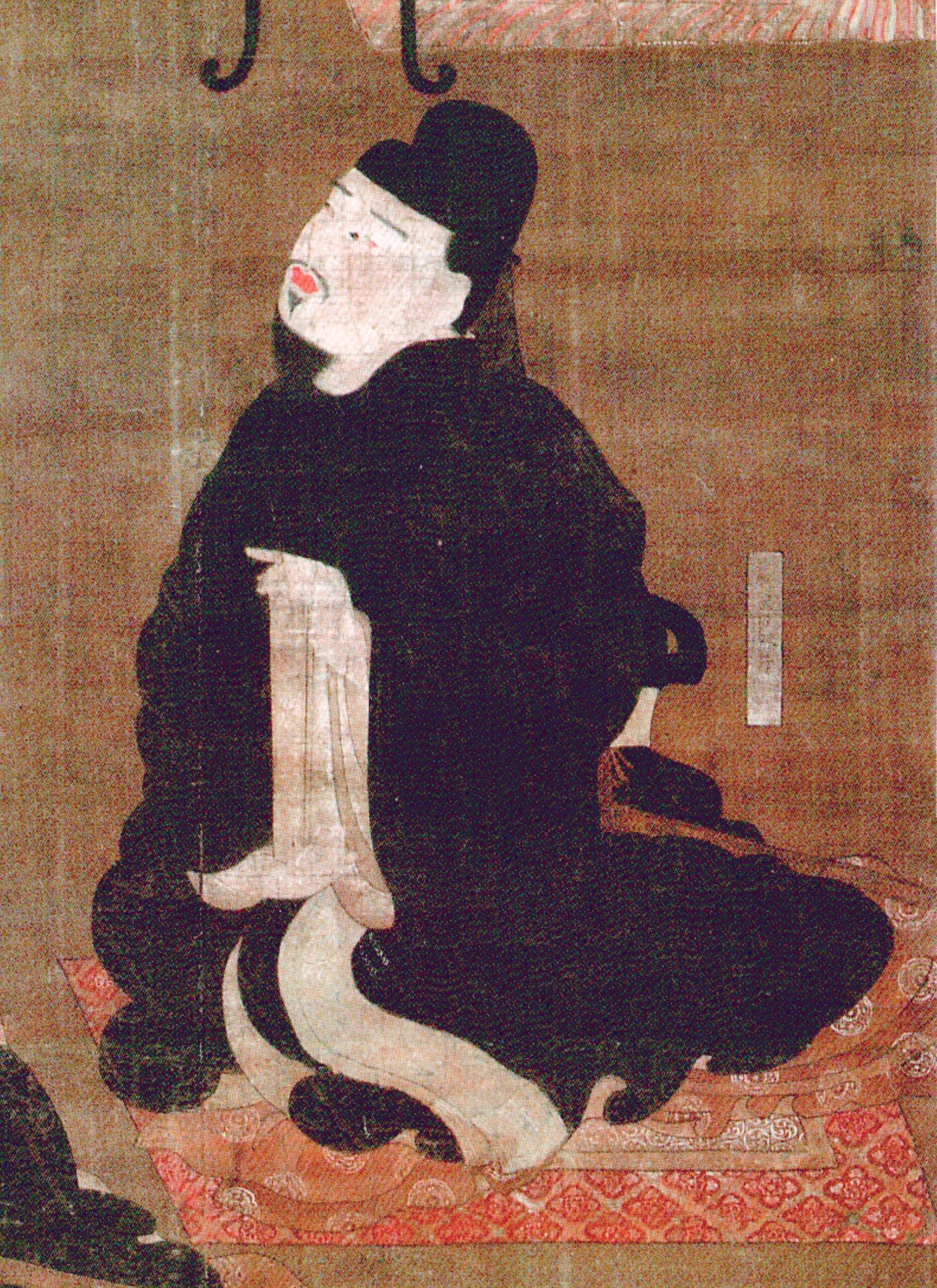
Ono no Imoko was a Japanese aristocrat and diplomat who was prominent during the Asuka period (roughly the 6th and 7th centuries).
During the reign of Empress Suiko, he was chosen as an official envoy to Sui China. His mission was to deliver a formal state letter from Japan directly to the Chinese Emperor.
Through this diplomatic exchange, Ono no Imoko was instrumental in bringing back advanced Chinese political systems, culture, and knowledge to Japan. This information is believed to have significantly influenced the foundation of Japan’s first centralized, law-based government.
He is recognized as one of the key figures symbolizing the dawn of Japan’s formal international diplomacy.
This is the crucial point: the origin of Mizuhiki was not “decoration,” but an amulet to mark a sacred offering.
This custom of tying a red and white cord to gifts was adopted by the Japanese Imperial Court and became established in Japanese culture.
Lore 2: Why “Mizu” (Water) and “Hiki” (Pull)?
So, why did this cord come to be called Mizuhiki? The answer lies in its unique manufacturing process.
Mizuhiki is made by twisting long strips of washi (traditional Japanese paper) into a tight cord called a kōyori. Then, mizu-nori (water-based glue) is “pulled” (hiki) across its surface and left to dry, hardening the cord. This very process, “pulling the water-glue,” is said to be the origin of the name Mizuhiki.
This process is the core of what makes Mizuhiki a material unlike any other. The glue-hardened paper gains two contradictory properties: suppleness (the flexibility to be bent into any shape) and rigidity (the stiffness to hold that shape).
The reason your accessory can maintain its beautiful, three-dimensional form while remaining light and airy is a direct result of this “water-pulling” wisdom.
Lore 3: The Surprising Link to Samurai Top-Knots
Today, “Iida Mizuhiki” from Nagano Prefecture holds a vast share of the national market, but its rise was born from a dramatic crisis.
During the Edo period, the main product of Iida’s paper industry was not Mizuhiki. It was motoyui—the paper cords used by samurai and townspeople to tie their chonmage (top-knots). Mizuhiki was merely a side business.
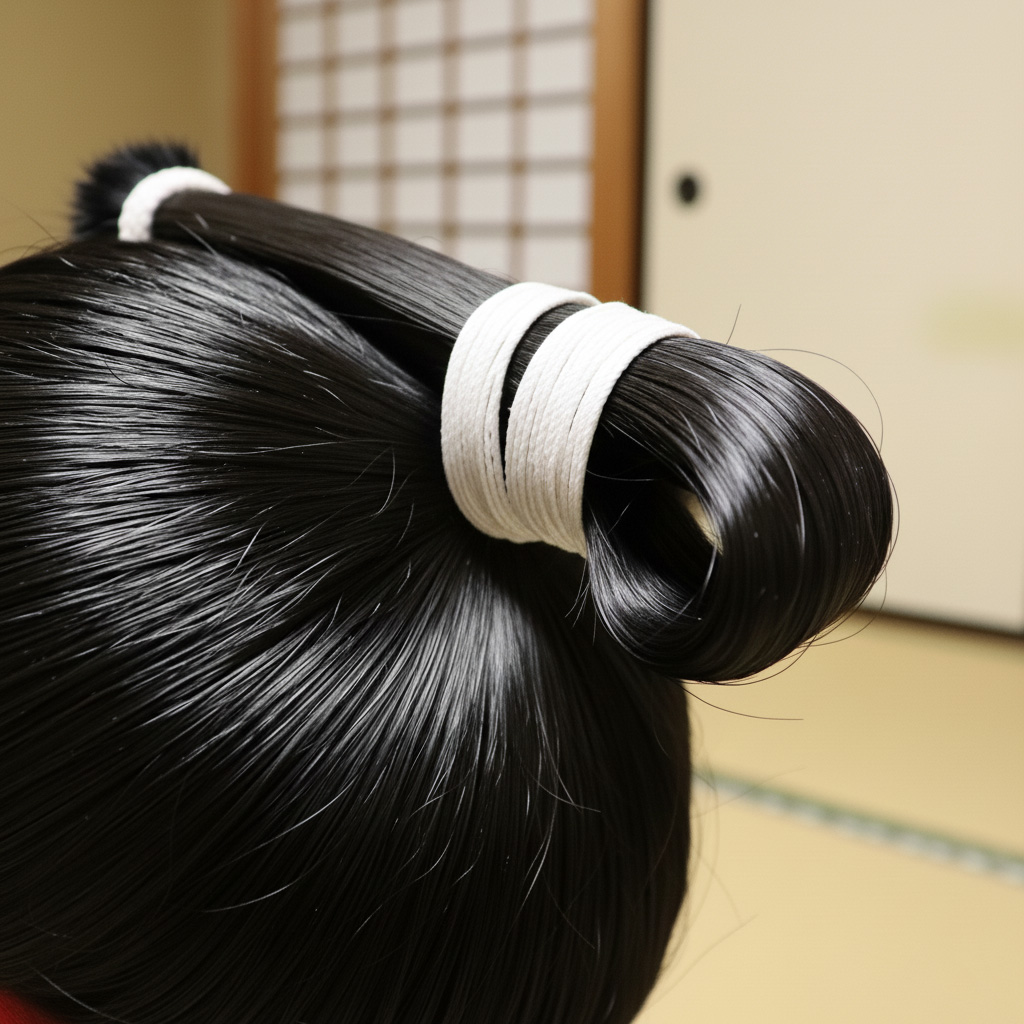
Then came the Meiji Restoration. In 1871, the “Danpatsu-rei” (Hair-Cutting Order) was issued, and men across the nation cut off their top-knots.
The demand for motoyui vanished, and Iida’s main industry was destroyed. Facing desperation, the artisans of Iida made a historic decision: they pivoted, channeling all the technical skill they had honed making motoyui into their side business, Mizuhiki.
They turned crisis into opportunity. The same spirit of overcoming challenges and adapting to the times is what allows us to evolve Mizuhiki from formal gift-envelopes into the accessories you see today.
Lore 4: From 2D to 3D – The Birth of an Art Form
For most of its history, Mizuhiki was used in “flat” knots for goshugi-bukuro (celebratory gift envelopes). This was dramatically changed by Tsuda Sōkichi, the founder of “Kaga Mizuhiki” in Ishikawa.
He developed techniques to craft Mizuhiki into stunning, three-dimensional art forms like cranes, turtles, and “sho-chiku-bai” (pine, bamboo, and plum), which are all symbols of good fortune. His work elevated the yuinō (traditional betrothal gifts) into breathtakingly lavish displays.
This leap into 3D art created a new demand. To realistically depict the green of a pine tree or the red of a plum blossom, the traditional “red & white” or “black & white” was not enough. This artistic evolution spurred the development of the many colorful Mizuhiki cords available today.
The vivid color of your accessory is a direct descendant of Tsuda Sōkichi’s quest for beauty and innovation.
The “Grammar” of Mizuhiki: A Language of Color and Shape
Mizuhiki acts like a “language,” conveying the sender’s heart through combinations of color and knot-tying. Here is its basic “grammar.”
Color Grammar: Celebratory vs. Mourning
The color of the Mizuhiki indicates whether the occasion is celebratory or somber/mourning.
Celebratory Rules
- Red & White: The most common combination, used for all general celebrations. Red symbolizes “joy” and “warding off evil,” while white symbolizes “purity” and “the sacred.”
- Gold & Silver: A more formal and luxurious combination than red & white, used for profound, “once-in-a-lifetime” events like weddings or longevity milestones.
- The Rule of Placement: For celebrations, the darker color (Red or Gold) is always placed on the right.
Mourning Rules
- Black & White: Used for general condolences and Buddhist funeral services.
- All Silver: Used for more formal or high-value monetary offerings (e.g., over 50,000 yen).
- Yellow & White: A regional custom, primarily in the Kansai area (Kyoto, Osaka), used for memorials after the initial 49-day mourning period, such as the first-year anniversary.
Knot Grammar: “Once Only” or “Many Times”?
The grammar of the knot itself is based on a very direct, almost magical, wish: “Should this event repeat, or not?”
- Butterfly Knot (Chō-musubi) Also known as the “flower knot.” Like a ribbon, it can be easily untied and re-tied. For this reason, it is used for events you hope will happen again and again, such as childbirth, promotions, academic achievements, or seasonal gifts.
- Knot of No Return (Musubi-kiri) Also known as the “true knot” (ma-musubi). This knot is tied so securely that it cannot be undone. Therefore, it is used for events you want to happen only once. This has two sides:
- Celebratory: For weddings, with the wish that it is a “once-in-a-lifetime” bond that will never be undone.
- Somber: For funerals or visiting the sick, with the prayer that this sorrow or illness “will not be repeated.”
What Does Your Accessory’s Knot Mean?
The knots used in your accessory belong to a special category called Kichijō-musubi (Auspicious Knots).
Many of these are evolutions of the Musubi-kiri (Knot of No Return). They cleverly transform the “cannot be undone” aspect into a powerful, positive prayer: “May this happy state last forever.”
Ume-musubi (Plum Knot)
This lovely knot, which mimics the shape of a plum blossom, is an application of the musubi-kiri. It is imbued with three powerful meanings:
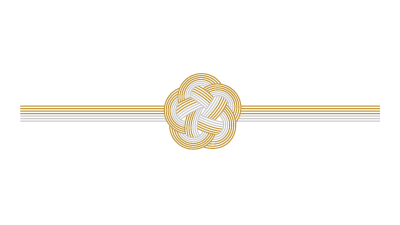
- A Strong Bond: Because it is a complex, tight knot that won’t come undone, it symbolizes a “firm, unbreakable bond.”
- A Protective Amulet: In old Japan, the fragrance of the plum was believed to “ward off demons.” This knot strongly carries the Mizuhiki’s original meaning as a protective charm.
- Improved Fortune: The plum is the very first flower to bloom after a harsh winter, heralding the arrival of spring. It is seen as a powerful omen of good things to come, symbolizing “improving luck” and “a turn for the better.”
Awaji-musubi (Awaji Knot) / Tama-musubi (Ball Knot)
The Awaji-musubi is a form of musubi-kiri said to be modeled after awabi (abalone), which was a sacred offering to the gods.
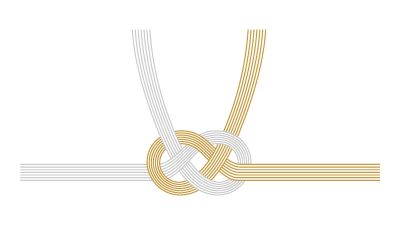
Its unique feature is that the more you pull the two ends, the tighter the knot becomes. For this reason, it symbolizes an “everlasting bond” and “unbreakable ties.”
When this knot is tied into a three-dimensional sphere, it is called a Tama-musubi (Ball Knot). If your accessory is a small, round ball, you are wearing a “treasure jewel” that is tightly packed with “good connections” and “good fortune.”
Ma-musubi (True Knot / Knot of No Return)
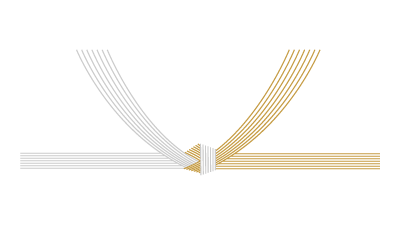
This is the classic musubi-kiri, a firm knot that is “not easily undone.” It is used for all “once-only” occasions, including weddings (happiness), funerals (sorrow), and visiting the sick (illness).
Chō-musubi (Butterfly Knot)
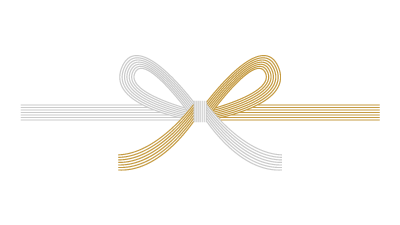
The standard ribbon knot. In contrast to the musubi-kiri, it can be “easily untied and re-tied,” so it is used for happy occasions that you wish to have “repeat,” such as childbirth or promotions. It is never used for weddings or funerals.
Other Auspicious Knots
- Nanohana-musubi (Rapeseed Flower Knot): A symbol of “love” and “hope.”
- Aioi-musubi (Growing Old Together Knot): A romantic knot meaning “to live together and grow old together,” used for engagements and anniversaries.
- Matsu-musubi / Kame-musubi (Pine/Turtle Knots): Symbols of “health” and “long life.”
What Is Your Knot’s Prayer? A Quick Guide
| Knot Name | Symbolizes | Meaning & Prayer |
| Ume-musubi (Plum Knot) | Plum Blossom | Strong bond, protection, improved fortune |
| Awaji-musubi (Awaji Knot) | Abalone | Everlasting bond, strong ties |
| Tama-musubi (Ball Knot) | Jewel (3D Awaji) | Good connections, “treasured” fortune |
| Aioi-musubi (Growing Old Together) | Living Together | Marital bliss, strong partnership |
| Nanohana-musubi (Rapeseed Flower) | Spring Flower | Love, hope, arrival of happiness |
| Matsu-musubi / Kame-musubi | Pine / Turtle | Longevity, health, long life |
Conclusion: To “Wear” Tradition
Let us return to the three essential meanings of Mizuhiki:
- A symbol of Purity
- A protective Amulet
- A symbol of Connection
When you “wear” this accessory, you are practicing all three of these traditions in a modern way.
First, it is a “seal” of authenticity, containing the heart and skill of its maker.
Second, just as Ono no Imoko’s red cord was for safe travels, your accessory becomes your own “small amulet” for your daily life.
And third, this accessory “connects” you, the wearer, to us, the makers. Furthermore, when you wear it, it may spark a new conversation: “That’s lovely. What is it?” In that moment, a new connection is tied.
To welcome a piece of traditional craft into your life is to receive the grand story behind it, and in doing so, you become the one who writes its next chapter.
May this small knot bring you a little good fortune on your journey.